About
Pop Nouveau Entertainment:
Redefining jazz Events
Who We Are:
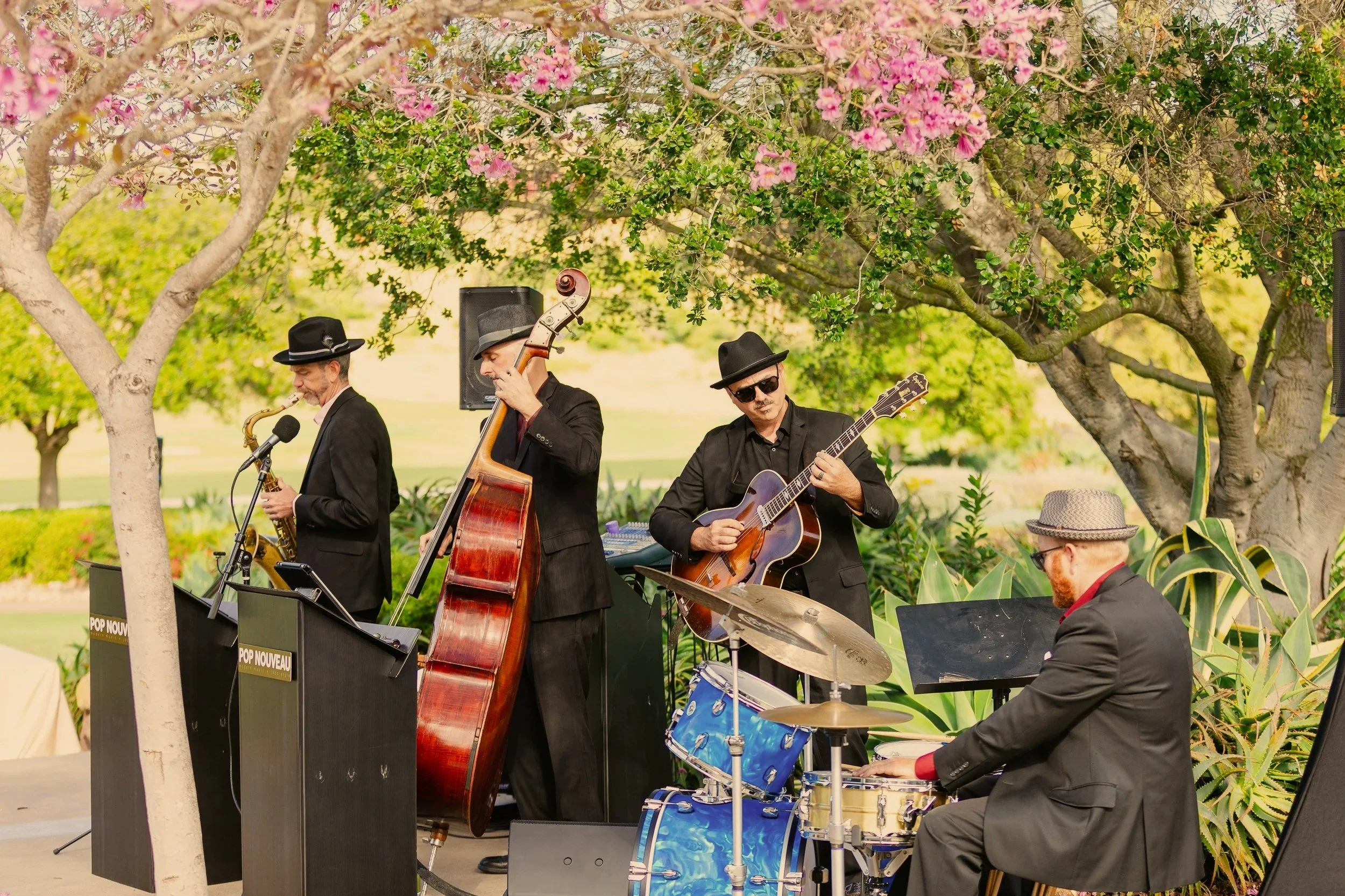
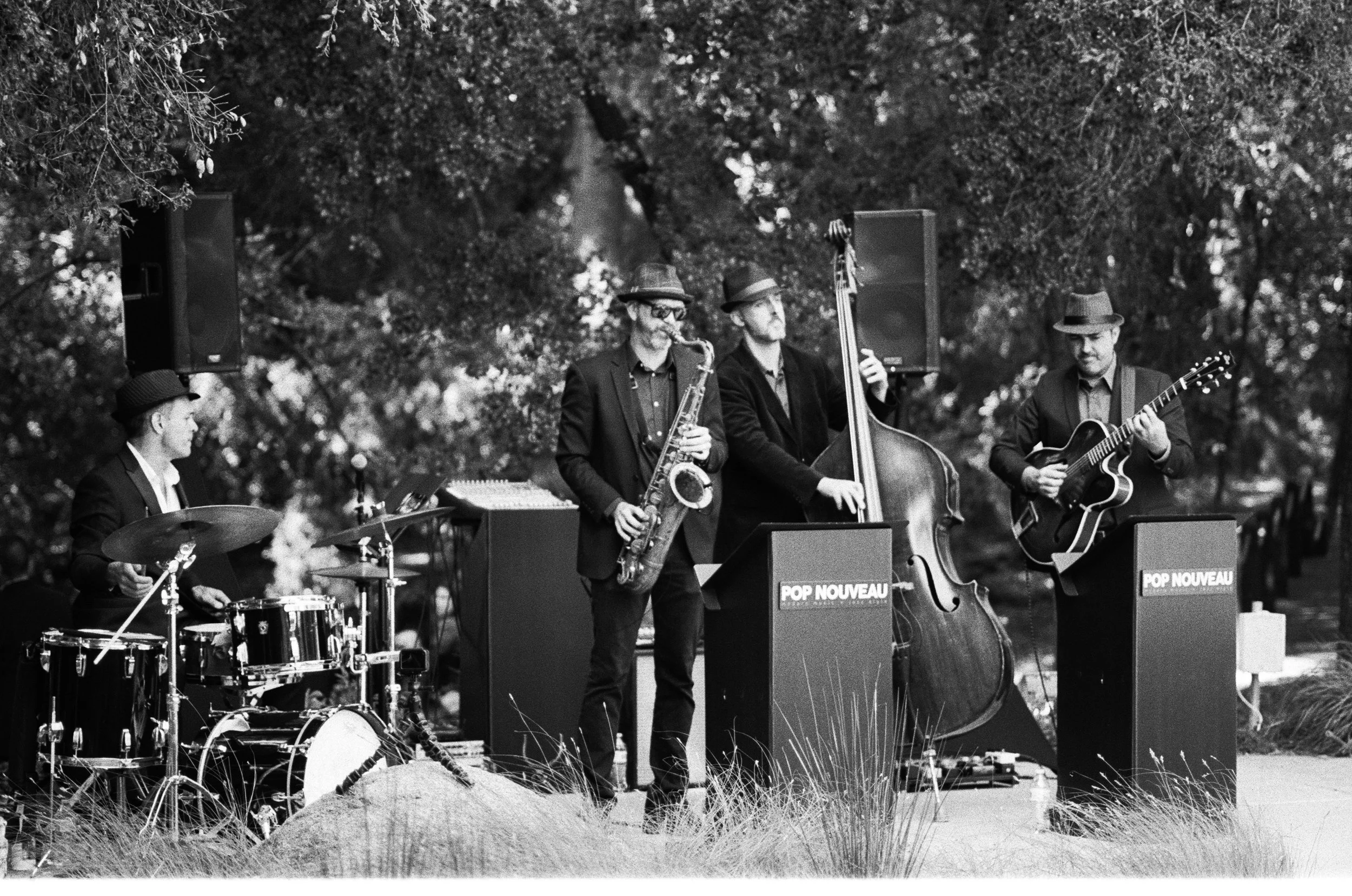
At Pop Nouveau, we don’t just play jazz — we curate atmosphere. With over 50 years of combined experience and thousands of performances across the globe, our team represents the highest standard of musical excellence in Southern California. Our roster is composed exclusively of 1st-call session pros and touring elites who have shared the stage and studio with international icons like Pitbull (on the hit "Fireball"), John Legend, Macy Gray, Meghan Trainor. By ensuring our artists have the premium environment they need to excel, we deliver an unmatched energy that transforms any event into a world-class experience.
We specialize in a unique musical alchemy: the "Pop-to-Jazz" transition. Our signature sound takes beloved modern hits and reimagines them through the lens of jazz, swing, and soulful grooves. From the "Cool" allure of a Sinatra-inspired pop cover to the "Hot" intensity of a brass-heavy anthem, we bridge the gap between nostalgia and trend. Having performed at prestigious destinations ranging from Dubai and Jakarta to Honolulu and the Bahamas, we bring a global perspective to our arrangements, ensuring your guests are genuinely surprised and entertained by every new note.
Whether you are hosting a gala at The Beverly Hilton, a wedding at The Hotel Del Coronado, or a corporate soirée at The Ritz Carlton, we provide a tailored musical journey that matches the prestige of your venue. From the intimate Pop Nouveau Trio to our spectacular 7-piece Septet, our ensembles have graced the country’s most iconic venues, including the Nixon Presidential Library and The Resort at Pelican Hill. Based in SoCal but available for travel worldwide, Pop Nouveau provides the prestige of world-class musicianship paired with an irresistible, contemporary pulse that keeps your event grooving from the first note to the final encore.
Our Leadership
Dan Boissy
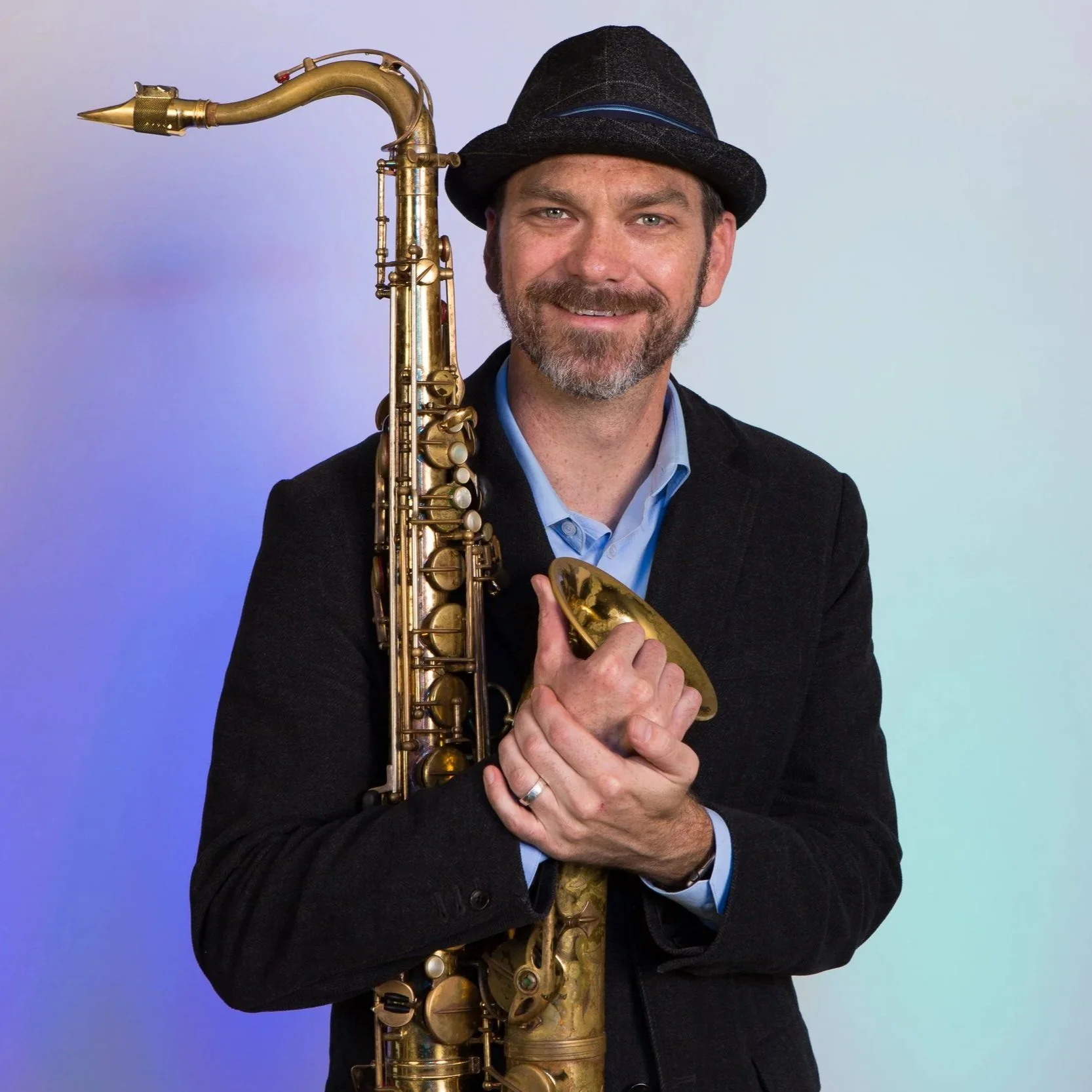
An elite Los Angeles-based saxophonist and composer, Dan Boissy has built a prolific career defined by high-profile performances and recordings with industry legends. Most notably, Dan is featured on Pitbull’s global hit "Fireball" and has performed or recorded with stars such as John Legend, Meghan Trainor, Macy Gray, Fitz and The Tantrums, and is leader and music director of the legendary smooth jazz group Down to The Bone. His extensive stage credits include appearances on The Tonight Show and Jimmy Kimmel Live, with performances at the Hollywood Bowl and major international festivals like Bonnaroo and Java Jazz (Jakarta, Indonesia). In addition to his work as a first-call freelance musician, Dan serves as the music director and co-founder of Pop Nouveau, bringing his decades of expertise—from his early days with the Sam Rivers Rivbea Orchestra to his current international tours—to the forefront of the contemporary music scene.
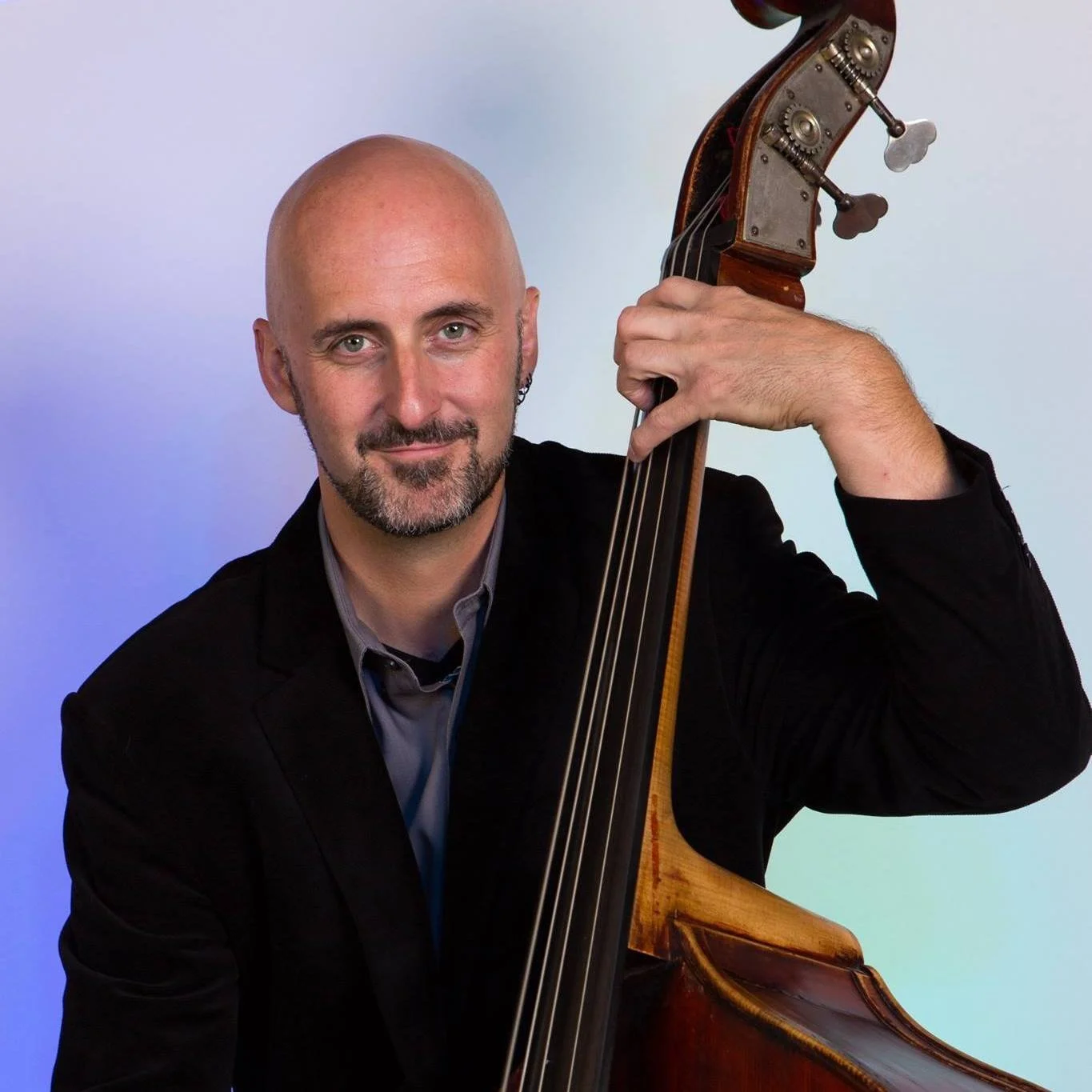
Sam Johnson
A musical chameleon with a career spanning from high-octane punk to refined orchestral works, Sam brings a vast, eclectic palette to every project he touches. This broad stylistic range serves as the creative blueprint for the genre-defying songbook of Pop Nouveau, which he helped launch as co-founder and co-music director. Sam’s virtuosity has earned him prestigious stages alongside an impressive roster of icons, including pop star John Popper, jazz luminaries Grace Kelly and Christopher Hollyday, and violin virtuoso Alex DePue. Whether navigating complex jazz ensembles or driving a theatrical production, Sam’s reputation as a well rounded and versatile musician is defined by his unique ability to adapt and move between diverse musical worlds.
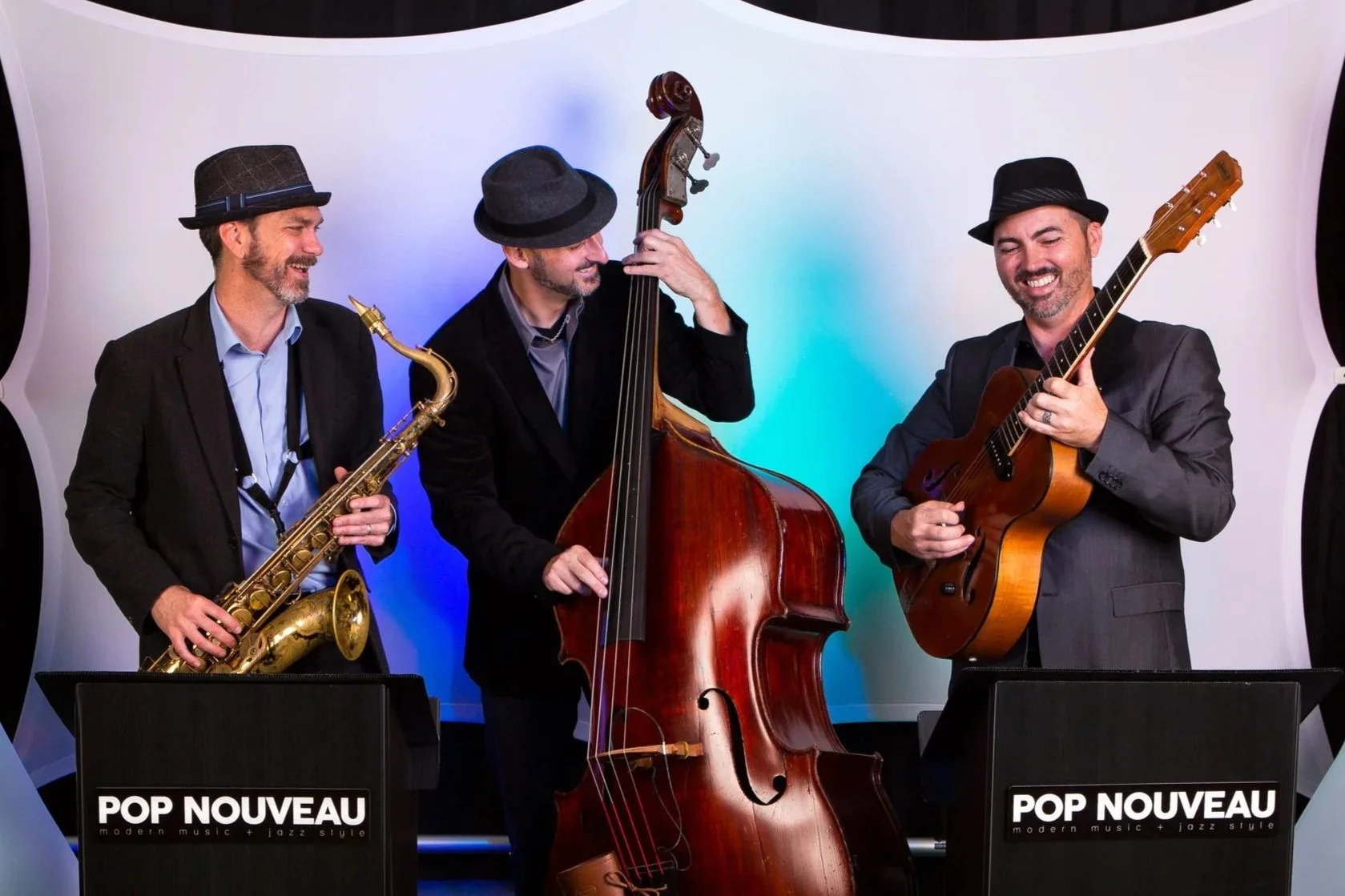
Our Roster
Pop Nouveau works with some of Southern California’s best and most talented jazz musicians, from 1st-call guitar players in San Diego and Los Angeles to Broadway drummers and top-call jazz vocalists. We take care of our artists, ensuring they have the environment they need to excel, which translates into an unmatched energy for your event. Because our roster consists of active session pros and touring elites, our sound is authentic, polished, and contemporary. We don't just 'play jazz' — we represent the highest standard of musical excellence in the region.
The Vocalists: Soulful & Sophisticated
Our vocalists are more than just singers; they are storytellers. Often found headlining major Southern California jazz festivals or performing in premier musical theater productions, they bring a refined presence and incredible range to every set. Whether it’s the smoky allure of a classic ballad or the high-energy swing of a Great American Songbook standard, our vocalists deliver a performance that commands the room.
The Rhythm Section: The Heartbeat of Excellence
Comprised of Broadway-vetted drummers and session-pro bassists, our rhythm sections provide the foundation for everything we do. These are the musicians who keep the "cool" in the groove and the "hot" in the swing. With years of experience playing together in the studios of Los Angeles, they bring a telepathic level of communication to the stage that only true professionals possess.
The Virtuosos: 1st-Call Soloists
From San Diego’s most sought-after archtop guitarists to Los Angeles’ premier horn players, our soloists are the "1st-call" for a reason. These artists have spent decades perfecting their craft, resulting in a technical brilliance that is both effortless and awe-inspiring. They provide the signature "Pop Nouveau" sound: authentic, polished, and masterfully executed.
The Arrangers: Crafting the Sound
Beyond the performance, our roster includes talented arrangers who ensure that even the most modern hits feel right at home in a jazz setting. By meticulously tailoring each chart to the specific ensemble, they allow our musicians to do what they do best: create a cohesive, high-end atmosphere that feels custom-built for your event.
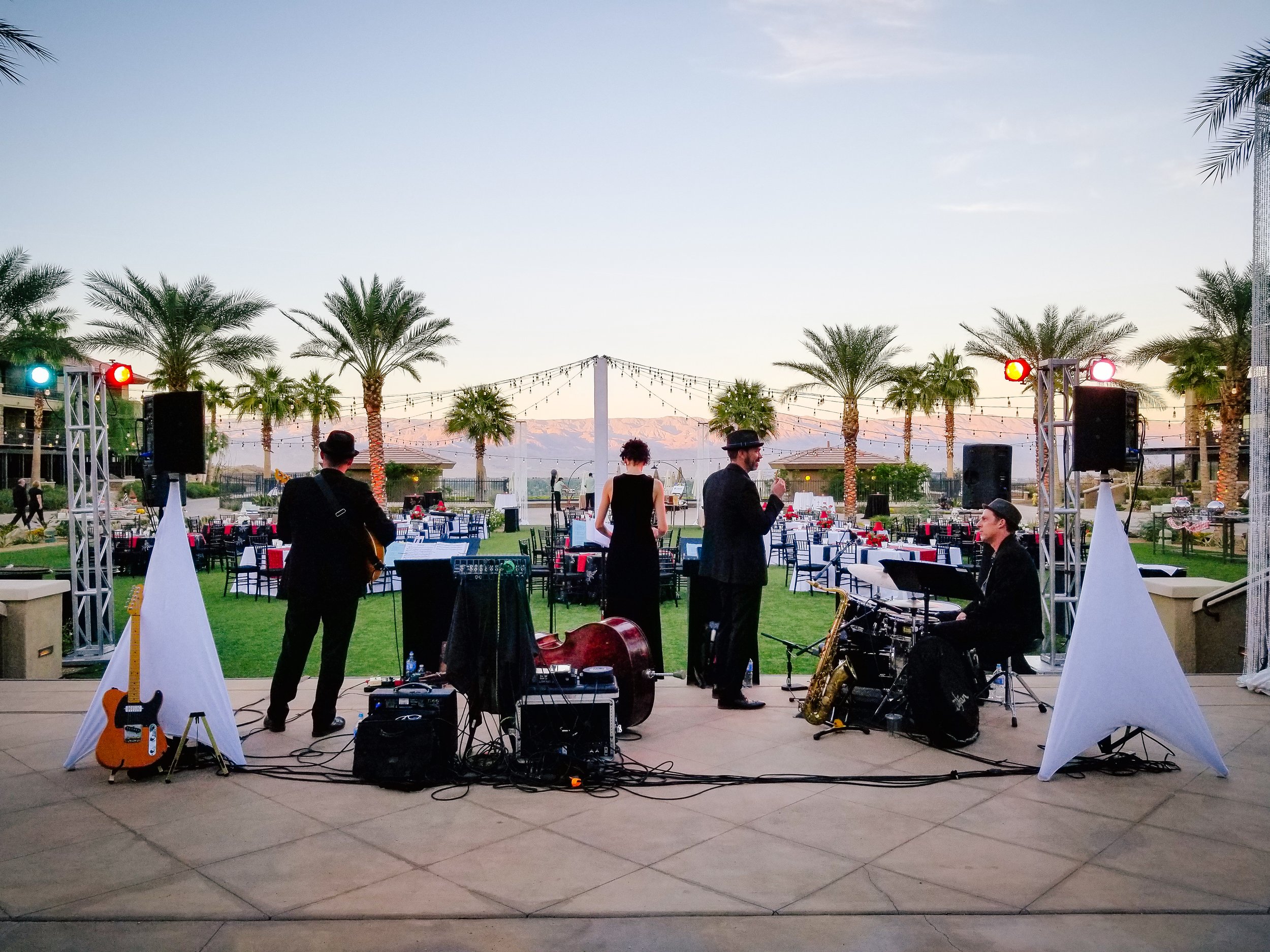
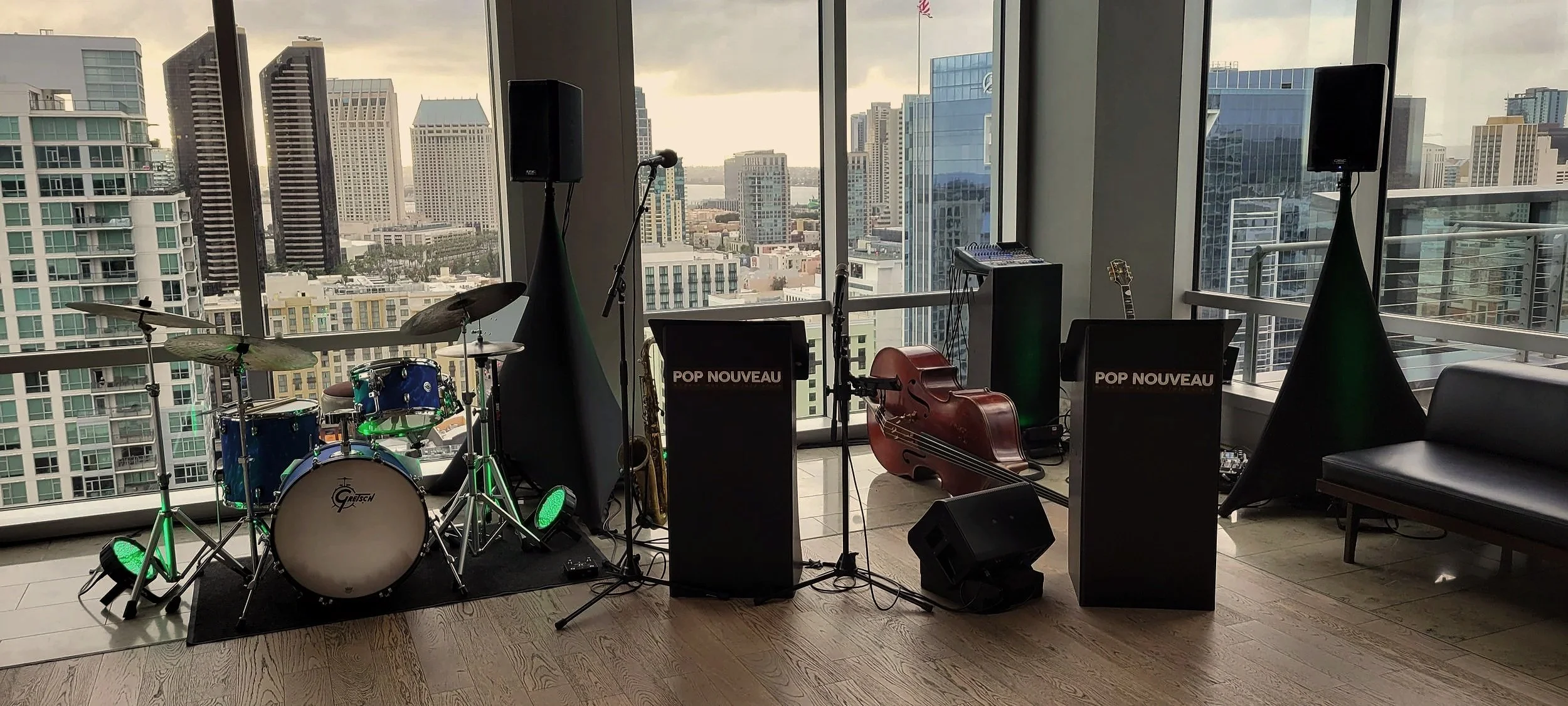
Pop Nouveau partners with some of Southern California’s
most unique venues and event producers! Click here to see the list!
The Pop Nouveau Experience: Our Process
I. The Discovery Session (Introductions)
Defining the Vision: We begin with a collaborative consultation to understand the soul of your event. Whether you’re looking for a sophisticated "Speakeasy" lounge feel or a high-energy jazz-pop fusion, we dive deep into your aesthetic goals.
Curated Atmosphere: Based on your input, we suggest the perfect ensemble configuration—from intimate duos to a swingin’ big band—ensuring the musical "vibe" is a seamless extension of your event’s personality.
II. Logistics & Bespoke Quoting
Ironing Out the Details: We review the logistical framework, including venue acoustics, performance duration, and specific timeline requirements (e.g., cocktail hour vs. main stage).
The Fine Tuning: We’ll confirm the setlist, address any specific requests, and accommodate minor adjustments to the schedule or flow.
Transparent Pricing: You will receive a comprehensive, custom-tailored quote that accounts for all variables, ensuring there are no surprises—just world-class entertainment planned with precision.
III. Securing The Date
Securing the Date: To provide you with total peace of mind, we will issue a formal performance agreement and request a deposit.
Binding the Contract: Once the deposit is received, your date is officially locked into our calendar, and the talent is fully committed to your event.
Final Settlement: For your convenience, the remaining balance is due on or before the day of the event, allowing you to focus entirely on your guests.
IV. The Final Synergy (7-Day Checkup)
The One-Week Countdown: Exactly seven days before the event, we touch base for a final "green light" check. We confirm arrival times, load-in logistics, and onsite contacts so that when we step onto the stage, the only thing you have to do is enjoy the music.
V. The Event Day Experience
Our Professionalism: Our team arrives early for a discreet load-in and soundcheck. From our sharp, event-appropriate attire to our polished stage presence, we represent the highest standard of corporate and private entertainment.
Dynamic Flexibility: Live events are fluid, and we excel at adapting on the fly. Whether your keynote runs long or the crowd energy demands an immediate shift in tempo, we "read the room" and adjust our performance and volume to perfectly suit the moment.
Sonic Quality & Excellence: We bring studio-grade musicianship and high-end sound equipment to every venue. With world-class talent like Dan and Sam at the helm, you are guaranteed a performance characterized by virtuosic skill and crystal-clear sound quality that never overpowers the conversation.
What Is Jazz?
A Living Language of Music
More Than a Genre
Jazz is often described as a style of music, but that definition barely scratches the surface. Jazz is conversation, movement, history, and emotion all happening at once. It can be elegant or raw, structured or spontaneous, familiar or entirely new. At its core, jazz is a living language that continues to evolve while honoring where it came from.
Whether heard in a small club, a concert hall, or woven subtly into modern pop and film scores, jazz remains one of the most influential and expressive art forms in music history. To understand jazz is to understand how music adapts, responds, and connects people across generations and cultures.
But what if jazz were simply defined as improvisation? Where would that place its roots? This question opens the door to understanding jazz not only as a genre born in a specific time and place, but as a broader musical mindset shaped by history, culture, and human expression.
Where Jazz Began and Where It Is Now
American jazz is said to have originated in the late 19th and early 20th centuries in New Orleans, shaped by African American communities blending African rhythms, blues, ragtime, spirituals, and European musical traditions. According to the Smithsonian National Museum of American History, jazz emerged as “a uniquely American art form rooted in collective improvisation, rhythmic complexity, and cultural exchange”.
Early pioneers like Louis Armstrong, Jelly Roll Morton, and Duke Ellington helped bring jazz from local gatherings to national and eventually global stages. As the music spread, it diversified into styles such as swing, bebop, cool jazz, hard bop, fusion, and contemporary jazz, each reflecting the social and cultural climate of its time.
Today, jazz continues to evolve. Modern artists blend jazz with pop, hip-hop, electronic, Latin, and soul influences, proving that jazz is not frozen in history but constantly responding to the present. As the National Endowment for the Arts notes, jazz remains “a music of innovation, collaboration, and creative freedom”.
Improvisation: The Deeper Roots of Jazz
If jazz were defined primarily by improvisation, its roots would extend far beyond American history alone. Jazz is often defined as a blending of African rhythms with the blues. However, a major defining element of jazz is its adaptability and improvisational nature.
This idea of musical conversation, flowing, reacting, and responding in real time as naturally as speaking with a friend, predates American jazz by centuries. Elements of improvisation, adaptation, and in-the-moment expression appear across many global traditions, including Baroque music, Flamenco, Romani music, Middle Eastern folk music, Indian classical music, Western Medieval and Renaissance music, and Traditional Irish music. This list could continue indefinitely.
Improvisation itself is rooted in the human experience. What makes American jazz distinct is the convergence of these influences through immigrants and enslaved people moving to the Americas. The clash, blending, and reshaping of cultures into something entirely new.
Jazz’s Influence on Modern Music
Jazz’s impact reaches far beyond its own genre. Many of today’s most recognizable musical styles, from rock to R&B they all borrow heavily from jazz harmony, rhythm, and improvisation.
The use of syncopation, extended chords, swing feel, and call-and-response patterns can be traced directly back to jazz traditions. Even contemporary producers and songwriters rely on jazz concepts when crafting layered arrangements or dynamic grooves. As music historian Ted Gioia explains, “[Jazz] reshaped the way musicians think about rhythm, melody, and freedom within structure”.
In this way, jazz acts as both a foundation and a bridge, connecting past musical traditions to modern expression. Its influence is not always obvious, but it is everywhere.
Why Jazz Still Matters
Jazz endures because it is built on listening, collaboration, and individuality. Every performance is different, shaped by the musicians, the audience, and the moment. That sense of presence and authenticity is what keeps jazz relevant, even in a digital age.
More than a century after its beginnings, jazz continues to tell stories about culture, identity, resilience, and creativity. It reminds us that music can be both deeply rooted and endlessly adaptable. And perhaps most importantly, jazz shows us that when structure and freedom meet, something truly timeless is created.
Styles of Jazz from the beginning to now
Acid Jazz, Afro-Cuban Jazz, Avant-garde Jazz, Bebop, Brithish Dance Band - 1920s/30s, Cape Jazz - (south africa), Chamber Jazz - small ensembles, Continental Jazz - Early European Jazz Dance bands, Cool Jazz, Crossover Jazz - another name for fusion, Dark Jazz - slow or erratic contemporary jazz, somber/mysterious tone - film noir, Dixieland, Electro Swing - Swing + EDM, Ethio-jazz - developed from Ethiopia, Ethno Jazz - world music, European Free Jazz, Free Bop, Free Funk - avant-garde jazz with funk, Free Jazz, Gypsy Jazz, Hard Bop, Indo Jazz - fusion of jazz and Indian music, Jazz Blues, Jazz Funk, Jazz Fusion, Jazz Rap, Jazz Rock, Kansas City Jazz, Latin Jazz, M-Base, Mainstream Jazz (1950s?), Modal Jazz, Neo-Bop Jazz, Neo-Swing, Nu Jazz - blending jazz with funk, soul, edm, free, Orchestra Jazz (symphonic Jazz), Post-Bop, Punk Jazz, Ska Jazz, SKiffle, Smooth Jazz, Soul Jazz, Straight Ahead Jazz, Stride Jazz, Swing, Third Stream - jazz + classical, Trad Jazz, West Coast Jazz